
Are Old T-Shirts the Secret to a Just Transition?

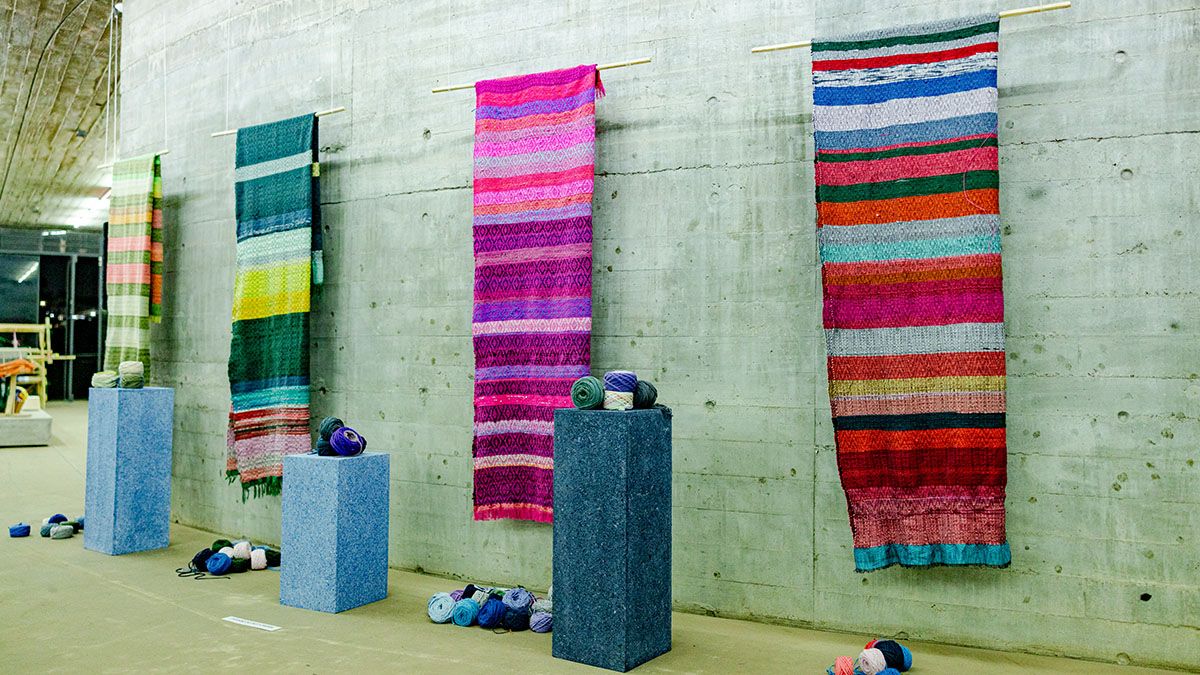
I first came across the collaboration in October, at the Nubuke Foundation gallery in Accra, Ghana. The exhibition was titled “From Tradition to Transformation” and charted the first six months of the project, culminating in a set of rich kente cloths woven with yarn made from damaged T-shirts (dubbed “tarn”). Here’s what I learnt.
The environmental crisis is a human behavior crisis
Accra is no stranger to oversimplified attempts at solving the waste crisis — multiple large international aid organizations have tried to clean up the local lagoon, spending millions of dollars on solutions that did not work in situ, and displacing the community in the process.
The collaboration takes a more systemic approach. “The focus was on how we could solve the textile waste crisis in a way that creates dignified, respectful and liberating livelihoods,” says The Or Foundation co-founder Liz Ricketts. “We’re innovating on the product side because, at the root, we’re trying to support human beings. For me, waste is a byproduct of a deeper issue.”
Top-down, data-driven solutions — often developed outside the stakeholder groups implementing them, or the communities affected by their implementation — risk failure as soon as they’re put into practice, adds TPJ founder Rahmée Wetterich. “Solutions have to be by the community, for the community.”
The flaws in this top-down approach have been laid bare countless times, stalling progress on decarbonization: renewable energy targets forced on suppliers who don’t have access to renewable energy infrastructure, sustainable product design regulations prioritizing synthetics over natural fibers on the basis of recyclability, or brands abandoning overseas suppliers in a bid to curb airfreight emissions with no regard for the workers left behind. “Sustainability in the Global North tends to start as something transactional and it rarely leaves that space,” says Ricketts.