
Tamás Trunk Interview | SBD

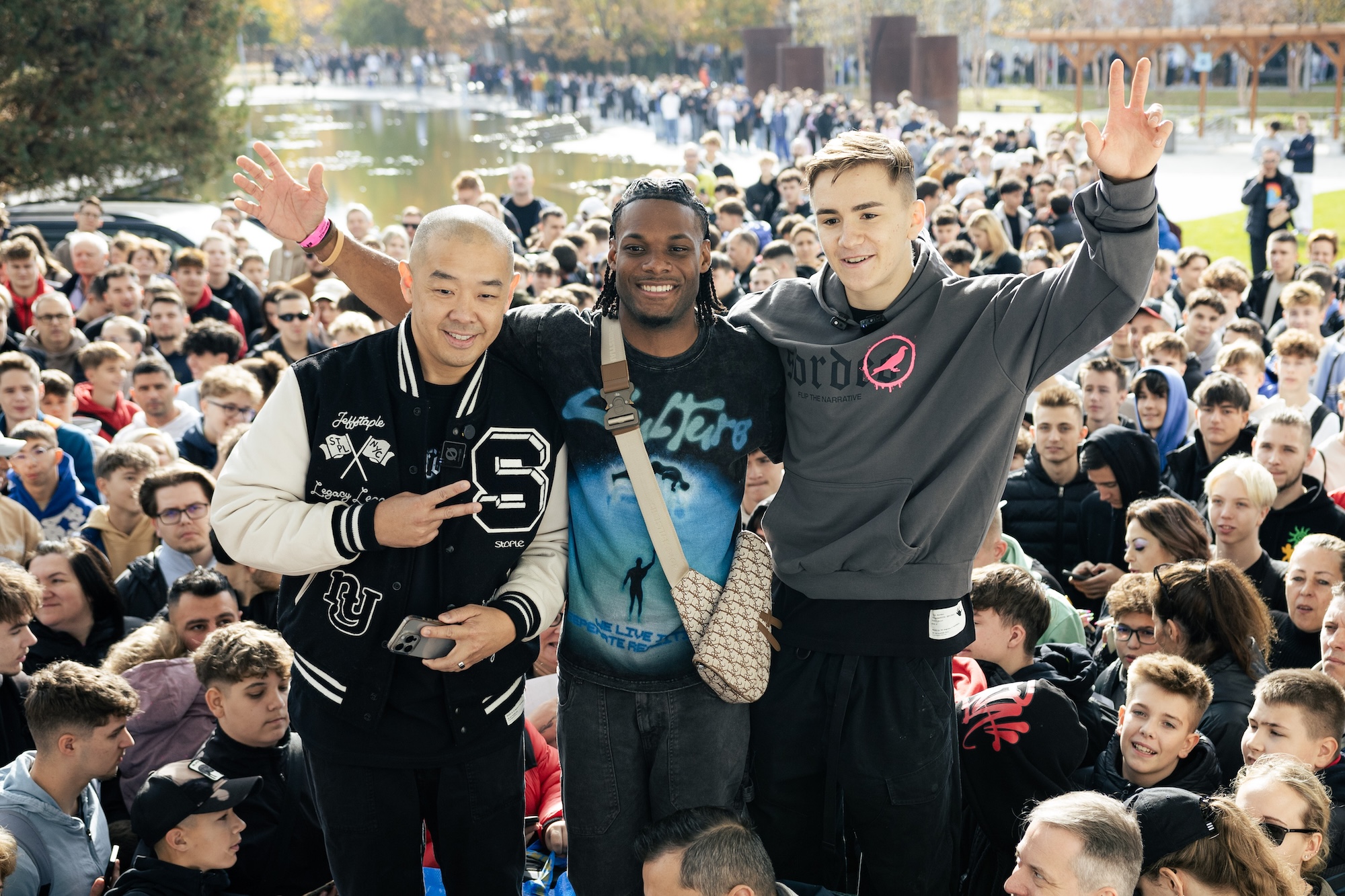
The notion of community, within the space of sneaker culture, has been living rent free in my head lately. What it was? What it is? What it will it look like going forward? But one question looms larger for me than the rest. What does community mean to me?
Now there’s the text book definition of “community” which states:
(noun) a group of people living in the same place or having a particular characteristic in common.
a feeling of fellowship with others, as a result of sharing common attitudes, interests, and goals.
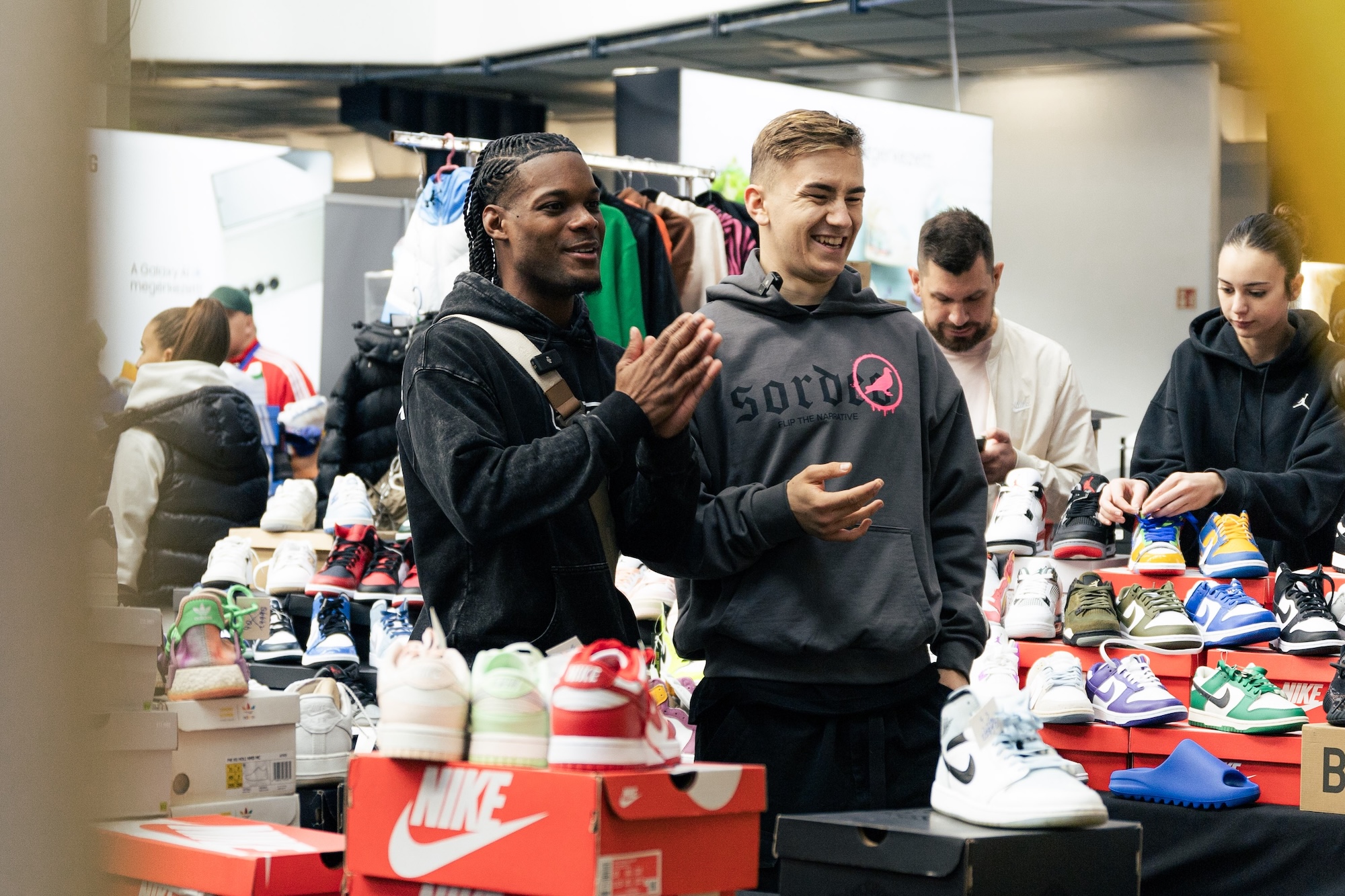
Personally, I see the sneaker community as an obvious derivative of sneaker culture. And as people begin to engage with one another over their shared love of sneakers, information and ideas are exchanged that can have a potential an influence on uninteracted portions of the community, and therefore, the culture.
Now, some have argued that the “sneaker community” has never existed at all. Like it’s some nostalgic figment of our collective imagination. I beg to differ. I believe that assessment to be a jaded point of view from a social media perspective of what the sneaker community is currently. And even I would have a hard time arguing against that assessment if we’re just looking through that vantage point. But I’ve seen different, both in the past and in the present that, lets me know that the community within sneaker culture has and does exist.
I remember waiting in line on release days and building comradery with familiar faces from past releases. I remember building a rapport with retail employees simply on the strength of you being a repeat customer, and not because you greased some palms for access to inventory to flip. I remember going on platforms like NikeTalk and seeing people look out for others in securing a particular sneaker. I remember going to events like Sneaker Con when it used to be about connecting with people over a shared passion, and striking up conversations over sneakers, before it became an influencer-centric, overpriced flea market whoring itself out for a viral moment. But anyway….
As I thought more about the sneaker community, I began to think about the impact social media has had on sneaker culture; both good and bad. Now I can go through the laundry list of all the negative effects it has had, but for the purposes of this article, I’ll focus on the good I believe it’s contributed. Social media has allowed us to not only connect with other people in our region of the globe, but it’s allowed us to connect and engage with other sneakerheads around the world in other countries. And it’s because of social media that I’ve managed to cultivate friendships with sneaker collectors overseas, including my friendship with Tamas Dablty from Budapest, Hungary.
Tamas is a writer, content creator, and the founder of Sneakerness, the biggest sneaker event in Europe. I recently had the opportunity to have a conversation with him. This is his story….
Tell me about Budapest and what’s the sneaker scene like there?
Tamas: “Hungary is a wonderful country. I think Hungarians are emotional and culturally sensitive, even as we live in a complex world full of events and rapid changes. In Hungary, there is a serious OG community that quietly exists. [There’s] the Hungarian OG collector András Nagy, [who] is very, very inspiring for me. [He’s] a very humble man who proudly clings to his dreams, which I think is really cool.”
You mentioned András Nagy as someone you look up to and are inspired by. Are there others in your community that find inspiration in and have you managed to make any connections with them? If so, how vital is that to you?
Tamas: “There were several personalities with whom [I’ve] had inspirational relationships with within the sneaker space, to whom I am very grateful. also on an international level. Inspiration for me is a very valuable thing. It is a huge feeling to receive more of it from someone than what would normally be expected from them. It helps you grow inside. [You] are pushed to [do] more, without the other person having any personal interest in it. András Nagy [has] practically dedicated his life to Michael Jordan. He has an incredible collection of Jordans spanning decades. He speaks about them with such love, and there is such knowledge behind him. [There’s] so much feeling and experience, and he’s had no so-called interest or profit in doing it. He simply just loved it. Truly. He kindly welcomed me for a video, and he referred to us as friends—he still does—even though at that point we [hadn’t met] personally. That meant so much to me. He let me in to record a video and hear stories from his era. It was unbelievable. And now it is a huge thing that he is coming to the event November 8th and 9th, and we can present these thoughts and encounters together on stage.”
How old were you when you got into sneakers? What are some of your first memories?
Tamas: “There was a moment at age 12 that I will never forget. I was standing in our home in the kitchen and I told my parents that I would like to do something significant in this culture. [Something that would allow me to create, add value to the culture, and connect with people]. I loved the world of sneakers. I learned German early, so German YouTube—which I always watched—is where I first came across sneaker culture. It had a big influence on me.
Everyone has that one sneaker that served as their entryway into sneaker culture, which pair was that for you?
Tamas: “I grew up on German-language social media in Hungary. It was in German culture where sneakers first moved me. With awe I watched the videos of the [sneaker] collectors there. And in [my] school breaks I scrolled through Flight Club on my laptop. [But] there was one pair. [The Air] Jordan 3 “True Blue”, which for me was the foundation stone that I always held onto. I stored it with great care in a special box. [But after] a year or two, I sadly outgrew this shoe. They literally became too small. [But] these were interesting times. I saw that many kids could not afford this passion that I shared. [There was] a kid who said that his dream was always to have a Jordan, only, he could not afford it. Because of this, I donated [my] sneakers to my [Jordan 3s to him]. The next day I noticed that my beloved shoes [had] already popped up in a group as a ‘Want To Sell’ post. I immediately [put a] bid on it and bought it back. [At that moment I] decided that I would never give this pair to anyone again.
At the time I was a little sad, but I also learned from it. I realized that this pair only meant that much to me, [but] for him it did not have the same meaning. [Maybe] he needed money. [Maybe] he wanted to sell it to buy another pair that would mean the same to him. [Either scenario] is totally understandable. Years later [that kid] unexpectedly wrote to me. He [hadn’t] forgotten this [situation] with me, and he was terribly sorry. It was moving for me that this kid—who at that time was also very young, just as I was, maybe 16 or 17—[had] apologized for selling the shoes, [even though I had given them to him] as a gift. He was becoming a football player and was in a very serious academy. He promised to send me a ticket for his first match. So that ‘True Blue’ Jordan 3 taught me a lot. I will never again let it out of my hands. Maybe it’s a childish story, but I often think back on it and remember [not everyone can] easily afford to buy their favorite sneakers.”
As young as you are, you’ve already published a book. Almost seems like an outdated medium to use in 2025. Especially for your age. Why write a book instead of recording content for YouTube or social media? (And yes, I’m fully aware of the irony of asking this question while writing an article, lol)
Tamas: “My grandmother was a linguist, [so] for me it somehow felt more ‘natural’ to write a book first, rather than starting a YouTube channel — that only came later. For me, [it] has always been about the fact that through [sneaker] culture, from every point of the world, I could connect with new people and tell new stories together.”
How old were you when you began writing?
Tamas: “I wrote my first book at the age of 13. It was first released in Hungarian. A year later it was published in German. There’s only a limited amount of sample copies written in English that exist, most of which are in the hands of geniuses in the sneaker world; such as Josh Luber, the founder of StockX, Steven Smith, the legendary designer who’s worked with brands like New Balance and Yeezy, and Jeff Staple. I am planning to update the book and publish it in English.”
I could only imagine what type of book I would’ve written at 13. Lol. What are some of the things you discussed in your book?
Tamas: “It was about sneaker culture, brands, and the way our generation works, both from an economical and a sociological aspect. It touched on the relationship between Generation Z and sneaker culture, as well as sustainability, politics, and more. But my writing goes beyond sneakers. I’ve written about the new age of brand building and the ‘Alpha Generation’. In fact, I’ve written two more books since then. ‘Kintsugi: The Calling of Brands’ and ‘The Alpha Guide’. The latter—a book published this year—contains sociological and media science along with aspects of brand building.”
What are some of the noteworthy names you’ve had attend your event so far?
Tamas: “Before mentioning the outstanding international personalities, I have to acknowledge the Hungarian shops and reseller communities, who have supported and appreciated my efforts since day one. [The love] is mutual. But—to name some names—in the first year, Jeff Staple, the founder of “Staple” and the creator of the” Pigeon” Dunk. He honored me with his arrival [to my event]. I could hardly believe it when such a large crowd of thousands welcomed him here in Budapest. Also here in the first year was the godfather of streetwear, Hiroshi Fujiwara. The stage talk with him and Jeff was magical. Imagine such a moment where your role models are giving you such acknowledgement. They are unbelievable.”
What impact did their attendance have on your event since then?
Tamas: “In the second year of my event, there were even more people camping out and lining up. That moment was iconic”
How would you like to see your event grow and evolve going forward in the future?
Tamas: “It’s important that the event can also move the mainstream [audience], but in such a way that it is always driven by the culture. People don’t need to come only for the sneakers [on their] first time. Maybe they come for playing FIFA or ESport, or for their favorite influencer. What matters is that the lasting experience remains [with them] and they leave with knowledge.
You mentioned people like Josh Luber, founder of StockX. He’s a pretty prominent name on the business side of sneakers. What support, if any, have you received from the business community? In Hungary or anywhere else?
Tamas: Recently, I participated in an internal, closed-circle, executive-level workshop on the Budapest Brand strategy, where I represented the opinion, how different cultures are truly essential. I was able to involve non-fashion brands—corporate brands—like KGM (car brand), Jeep, Uber, Samsung, DHL, and McDonald’s. And as a new-generation expert I can advise them on activities. With the corporate world, there is a lot of mutual respect because I talk about the new-generation from professional perspectives. [We discuss] game changer methods, sustainability, [and] brand building through subcultures. I try to educate them that you always have to put in [and] invest into the culture. In the case of every single company, I [don’t] just advise them, but also use my own influencer channels so that we catch their connection with the culture at the best point. When I approached these companies’ leaders with the concept of the event, they wanted to support me. They believed in my vision, [and eventually] the numbers also supported their decision. I [initially made] all of this happen as a one-person team, starting from my own budget behind the event. And since I appeared on the scene, these brands and executives [saw] my expertise and believed in me. [They saw] that together we can reach the new generation in a way that gives value for the youth. We have to [take] the new generation seriously, and also [we have to support] their entrepreneurial journeys. Under the name SIZE-UP, I organize an entrepreneurial competition every year where streetwear brands and resellers can get both financial knowledge and support from multinational companies and organizations supporting startups.”
I started off this article talking about “culture” and “community” and what they mean to me in regards to sneakers. What does “culture” and “community” mean to you in terms of sneakers?
Tamas: “The meaning of ‘culture’ of course differs in America and in Europe, simply based on geographical aspects. It also means different things to different generations. But for me, it still represents a kind of secret connection for all of us. Culture, and the exchange within culture, are very important. Yuval Noah Harari is a thinker who fundamentally believes that the world develops through common narratives. The evolution of societies, and humanity as a whole, has always depended on people enjoying the exchange of opinions, even about small things. But [in terms of sneakers], I don’t think we can speak about a unified European sneaker culture. Within a culture, even individual nations develop along different emotional paths. [And] where there is a ‘leader’ personality—around whom a community can be built—a culture can take on a different pattern. If I look at Hungary [specifically], who would have thought that thousands of people could’ve been brought to a [sneaker] event? Sneaker culture gave [me the opportunity] to connect and find common points of passion with people who may come from completely different backgrounds; culturally, socially, demographically, geographically. We can become close to each other and inspire one another. Culture is constantly evolving and changing, which is great, but [it] sometimes brings challenges. [It’s in] my personality to naturally [lead with] respect, without any particular reason needed. [And] not even just for the objects of the culture, but for the people who create them. I am interested [in what is the] melting pot of culture. I try to bring [people] together, [which is necessary for] the culture to grow. I try to educate—both [people and] companies—who want to connect with the culture. I’ve had a good experience with this. As I always say, ‘You have to put value into a culture, not just take out [of it].’ [That way] me, [and] people like you, we can write a common story. But obviously culture changes [over time]. Culture is [constantly] in motion. But I think it is always important to go back to the roots and respect its [core] values.”
Here in the states, there’s been some discussion about the future of sneaker culture. People wonder where its headed when left in the hands of this current, younger generation. Is there any such concern in your mind?
Tamas: “It seems that new, younger generations are less sensitive to culture. So therefore there [will be] generational differences. I am not a supporter of gatekeeping. Let the young come for whatever reason, but let’s teach them. As soon as they are inside, they’ll learn to love [the culture], and they’ll remain connected to our world longer. What I want to achieve is to bring in those young people, who maybe discovered sneaker culture on Tik Tok. Who have only seen glimpses or small parts of it, or [those who] may just have a surface-level interest in it, and give them the knowledge and stories of the culture. So that five to ten years from now, we can look back and say that ‘Yes, they continued this. Not only online, but also offline.’ I [want to] bring the new generation’s stars and the OG heroes [together], so that the young people hear their stories too. [I want them to not] just peek into the culture, but stay as well. I feel this is a personal duty that comes from within, and I gladly do it. And while having massive respect for the OGs, I find it so cool talking to younger people; interacting with them and [finding out how they] experience the culture and encounter with it differently than previous generations.”
What impact, if any, has American sneaker culture had on the European side of the sneaker community?
Tamas: “I have never been to the U.S. I know the U.S. through a European lens. Certain values, gestures, and stories may give a different meaning to me than to you. This autumn Chrono24 invited me to their event at Jeff Staple’s new store, where I will come. But of course I closely follow US culture. I have [my] impressions. The culture comes from the U.S. That’s a fact. Michael Jordan, Hip-Hop, RUN-DMC, [Chuck Taylor], all come from the U.S. I have huge respect toward the U.S. and the stories coming from there. I also built these stories into my book, since they defined my childhood.”
What are some of the misconceptions that you feel us Americans have towards European sneaker culture? More specifically, in Hungary?
Tamas: “Those who look shallowly from the outside, maybe might say, ‘Oh, well surely everything only arrives there later. The hype is just now coming up.’ Yet in Hungary we already has collectors [as early] as the 2000s. People [in their] 40s and 50s, whom I am also bringing on stage [at my event] this year.
Personally, I think everyone would benefit from getting outside of your normal environment and traveling to different places to experience something new. If they can afford to. You mentioned earlier about your past travels and how they’ve shaped your approach. What effect do you think traveling can have on someone’s worldview?
Tamas: “More and more often, travel today is not simply about destinations but about culture itself. For people who belong to certain subcultures, travel naturally becomes a way to connect their personal passion and purpose. When we look at travel now, it’s important to understand that tourism is no longer only about visiting landmarks. With technology and artificial intelligence, any sight can already be experienced visually. What matters much more today is actually being part of something in a foreign place, experiencing it authentically. I aim to give a one and only experience to my international visitors at [my] event, by bringing these incredible [people] as guests to Budapest.”
From your point of view, what role has social media played in the growth in sneaker culture overseas?
Tamas: “When I wrote my book at 13, the sneaker [community] in Hungary got its first mainstream spotlight. TikTok later gave [it] another big boost. I have an audience of 80k on TikTok, nearly 50k on Instagram, and nearly 60k on YouTube. I had to realize that with different communication tools I could achieve success. Tickets don’t sell by themselves. Posters and flyers, classic CI elements don’t create fandom or anticipation. Every day I shoot new videos related to the event. On days when I don’t post on TikTok tickets don’t sell, and on days I do, they do, even months before the event. I tell [my] and my partners’ entrepreneurial stories through [that] lens. So I post every day, step-by-step, I am building with year-round communication.”
So you have your event, plus a streetwear brand and an upcoming sneaker release. What other sneaker adjacent avenues are you looking to get into?
Tamas: “Basically, in Italy I study economics, politics, philosophy. This year, for example, I am starting with a B2B professional brand-building conference. That intersection, where economy, subcultures, and society meet is important to me. The education related to this, the trust, and the mutual inspiration are what matter to me. So because of my strategic thinking, I see myself in a global corporate-related environment as well, and also moving between cultures. Consulting and speaking activity, I think, will always remain with me and continue to grow.
Ok, to wrap up, I feel I must end this interview with an obligatory “what are your top 5 sneakers of all time”? Lol
Tamas: “There are sneakers where I can explain where the love for them came from, and that are embedded in the culture, and there are simply pairs that are personal favorites—[so] this is a subjective choice. I started making videos in 2016, and the sneakers I discovered in that era are defining for me. The ‘Sean Wotherspoon’ Air Max was the first, and perhaps the only, truly limited sneaker that ever dropped in Hungary, even if only a few pairs. The Afew x Saucony Goethe, a truly European story. As one meets more and more obstacles [in life], one realizes the truth of Goethe’s quote—which is written on the insole of the shoe: ‘Even from the stones that are placed in your path, you can build something beautiful.’ [As far as] OG Jordans [are concerned], it is hard to pick just one. [There’s] the OG Jordan XX; one of Tinker Hatfield’s closing attractions. The Eminem x Carhartt x Jordan IV. The OG Jordan VIII ‘Aqua’. But perhaps, the one that means the most to me is the ‘Concord’ XI. The XI got even more valuable for me with the [release of the] second ‘Space Jam’ XI, which [still has] meaning spanning over generations. The ‘Doernbecher’ series, which [has] contributed to society, is a big favorite of mine. The Nike SB Dunk High designed by Finnigan Mooney is a personal favorite, as well as the Nike Air Force 1 Low HTM 2 ‘Black Croc’.”
Tamas recently had Sean Wotherspoon as a guest speaker at his HypeWise conference in Budapest, where he also revealed his collaboration with Tamas’ brand SORDEO. Visitors to the event were given the first opportunity to purchase the Sean Wotherspoon x SORDEO limited edition pieces from their apparel collection. While the event has come and gone this year, there’s still next year’s event to look forward next November.
Personally, I have every intention on attending the event live in 2026. I would’ve gone this year but the idea of flying international with unpaid TSA agents and air traffic controllers didn’t sound ideal. But when all you know is what’s happening in your orbit, It becomes easy to forget that the world is much bigger than your environment. Community isn’t just confined to a neighborhood, it’s a sense of connection over a shared belief or passion. Culture is universal. At the very least, it’s global. So having said that, I can’t wait to leave my little corner of the planet to see first-hand what sneaker culture looks like in other parts of the world. Relating through our shared interests and similarities, while being open to embracing our differences.